Brain SVG Bundle: A Strategic Asset for Designers and Creators
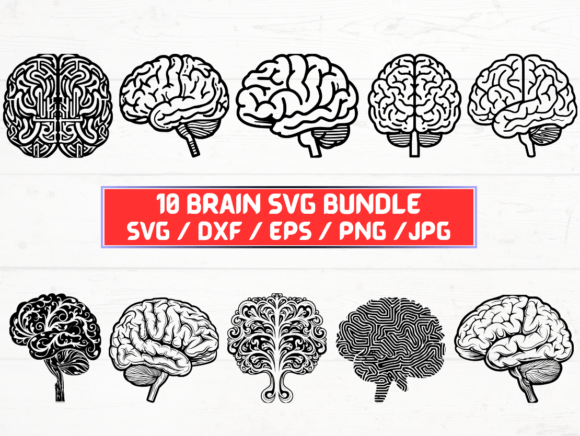
The Brain SVG Bundle is a digital asset collection that offers creators, marketers, and professionals a versatile set of vector graphics designed to represent cognitive processes, learning, and innovation. This bundle includes 10 SVG files, along with complementary formats such as PNG, DXF, JPG, and EPS, all delivered in a ZIP folder for instant download. Whether you're crafting educational materials, branding content, or marketing collateral, the Brain SVG Bundle provides a foundation for visual storytelling that aligns with strategic goals.
Strategic Use of Brain SVG Bundle
When considering how to integrate the Brain SVG Bundle into your workflow, it's essential to think about the context in which these visuals will be used. These brain-themed graphics can be particularly effective in presentations, websites, infographics, and promotional materials where the emphasis is on intellectual engagement, learning, or creativity.
For educators, incorporating these SVGs into lesson plans or online courses can help illustrate complex topics in a more engaging manner. For instance, using a brain graphic to highlight key concepts during a lecture on neuroscience or cognitive psychology can make abstract ideas more tangible.
Marketers may find value in leveraging the Brain SVG Bundle when promoting products or services related to mental health, productivity tools, or educational platforms. The visuals can serve as icons, headers, or background elements that reinforce the theme of cognitive enhancement or learning.
Designers and developers benefit from the versatility of SVG files, which are scalable without loss of quality. This makes them ideal for use across different screen sizes and resolutions, ensuring that your designs remain sharp and professional regardless of the medium.
Planning and Positioning with Brain SVG Bundle
Before relying on the Brain SVG Bundle, it's important to consider your specific objectives. Are you aiming to enhance brand identity, improve user experience, or support a particular message? Each of these goals may require a different approach to integrating the graphics into your projects.
If your goal is to position your brand as innovative or forward-thinking, using brain imagery can subtly communicate this message. However, it's crucial to ensure that the visuals align with your brand's tone and values. Overuse or mismatched application can lead to confusion or dilution of your brand's message.
For user experience (UX) design, the Brain SVG Bundle can be used to create intuitive navigation elements or to highlight interactive features that encourage cognitive engagement. For example, a brain icon could be used to indicate a "learning" section within an app or website.
When planning the use of these assets, also consider the audience. If your target audience is professionals or academics, a more sophisticated and minimalist design might be appropriate. Conversely, if you're targeting younger audiences or casual users, a more colorful and dynamic approach could be more effective.
Practical Examples and Implementation Tips
To get the most out of the Brain SVG Bundle, start by identifying specific use cases where these graphics can add value. Here are a few practical examples:
- Infographics: Use the brain SVGs to introduce sections discussing cognitive functions, memory techniques, or problem-solving strategies.
- Website Headers: Incorporate a brain graphic into your website's header or sidebar to emphasize your focus on knowledge, education, or innovation.
- Social Media Content: Create visually appealing posts using the brain SVGs to highlight tips, insights, or promotions related to learning and personal development.
- Print Materials: Include the brain images in brochures, flyers, or posters to support messaging around cognitive training, mental wellness, or educational programs.
When implementing these visuals, always ensure they are scaled appropriately and placed in contexts where they enhance rather than distract from the main message. Avoid cluttering your designs with too many brain-related graphics, as this can overwhelm the viewer and reduce the effectiveness of your communication.
Considerations Before Relying on Brain SVG Bundle
While the Brain SVG Bundle offers a range of benefits, it's important to recognize potential limitations and risks associated with its use. One risk is the possibility of misalignment between the graphics and your intended message. If the brain imagery is not carefully integrated into your design, it could confuse your audience or fail to convey the desired meaning.
Another consideration is the need for contextual relevance. Brain graphics may not be suitable for every project or industry. For example, using them in a financial or legal context might be inappropriate unless the message directly relates to cognitive processes or decision-making.
Additionally, while the high-resolution PNG and JPG files included in the bundle are useful for print, it's important to verify that these formats meet the requirements of your specific printing or publishing needs. Always review file specifications and resolution requirements before finalizing any design.
Maximizing Long-Term Value
To maximize the long-term value of the Brain SVG Bundle, consider how these assets can be repurposed across multiple projects. For instance, the same brain graphic can be used in a blog post, a social media campaign, and a printed brochure, each time tailored to fit the specific context and audience.
Furthermore, investing in additional design resources—such as complementary icons, color schemes, or typography—can help create a cohesive visual identity that enhances the impact of the brain imagery. This approach ensures that your use of the Brain SVG Bundle is part of a broader, well-thought-out design strategy.
Finally, keep in mind that the Brain SVG Bundle is a tool, not a solution in itself. Its effectiveness depends on how thoughtfully and strategically it is applied. By aligning its use with clear goals, understanding your audience, and maintaining a consistent design language, you can unlock its full potential and achieve meaningful results.