Bear SVG, DXF, EPS, JPG, and PNG: A Complete Guide for Designers and Creators
Whether you're a designer, marketer, or small business owner, having access to high-quality digital assets like Bear SVG, DXF, EPS, JPG, and PNG files can be a game-changer. These file formats are essential for creating professional graphics, logos, and illustrations that work across various platforms and mediums. Understanding the differences between them and how to use them effectively can save you time, money, and frustration in the long run.
What Are Bear SVG, DXF, EPS, JPG, and PNG Files?
Bear SVG, DXF, EPS, JPG, and PNG files are digital image formats used for different purposes. Each has its own strengths and is best suited for specific tasks:
- SVG (Scalable Vector Graphics): Ideal for logos, icons, and illustrations that need to scale without losing quality. It's also great for web use because it's lightweight and editable with code.
- DXF (Drawing Exchange Format): Commonly used in CAD software for engineering drawings, architectural plans, and 3D modeling. It allows for precise measurements and complex designs.
- EPS (Encapsulated PostScript): Best for print projects due to its high resolution and ability to maintain quality when scaled. It's often used for logos and illustrations intended for professional printing.
- JPG (Joint Photographic Experts Group): Great for photographs and images with gradients. It uses compression, so it's not ideal for logos or text-heavy graphics.
- PNG (Portable Network Graphics): Perfect for images that require transparency, such as logos with transparent backgrounds. It supports lossless compression, making it suitable for both web and print.
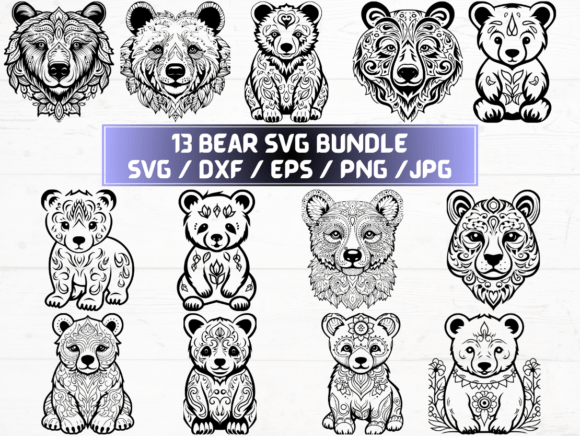
When you purchase Bear SVG, DXF, EPS, JPG, and PNG files, you get a ZIP folder containing multiple versions of the same design. This gives you flexibility depending on your project needs.
Common Mistakes When Using Bear SVG, DXF, EPS, JPG, and PNG Files
Many users make mistakes when choosing or using these file types. Here are some common pitfalls and how to avoid them:
Mistake 1: Not Understanding File Compatibility
One of the biggest mistakes is using the wrong file format for a specific task. For example, using a JPG file for a logo might result in poor quality if the image is scaled up. Always check which format is best suited for your purpose before downloading or using the file.
Mistake 2: Ignoring Transparency Requirements
If you're designing for the web or social media, you may need a transparent background. PNG files support transparency, but JPG does not. Make sure to choose the right file type based on your background needs.
Mistake 3: Overlooking Resolution Settings
Some file formats, like EPS and PNG, offer high-resolution options. If you're planning to print your design, ensure that the file has a resolution of at least 300 dpi. Lower resolutions can lead to blurry or pixelated prints.
Mistake 4: Not Checking for Licensing Restrictions
Before using any digital asset, make sure you understand the licensing terms. Some files may be restricted for commercial use or require attribution. Always review the license agreement to avoid legal issues later on.
How to Choose the Right Bear SVG, DXF, EPS, JPG, and PNG Files
Selecting the right Bear SVG, DXF, EPS, JPG, and PNG files depends on your project requirements. Here are some practical tips to help you choose wisely:
- For Web Use: Opt for SVG or PNG files. Both support transparency and are compatible with most web platforms.
- For Print Projects: Choose EPS or high-resolution PNG files. These formats ensure crisp, clear prints without distortion.
- For CAD Work: Use DXF files for precision and compatibility with engineering and architectural software.
- For Photographs: JPG is the best option due to its efficient compression and color depth.
Always consider the final output of your project when selecting a file format. The right choice can enhance the quality and professionalism of your work.
Practical Tips for Working with Bear SVG, DXF, EPS, JPG, and PNG Files
Once you've selected the appropriate file format, there are several steps you can take to maximize the value of your Bear SVG, DXF, EPS, JPG, and PNG files:
- Organize Your Files: Keep all your downloaded files in a dedicated folder. This makes it easier to locate and manage them later.
- Test Before Finalizing: Preview your design in different formats and resolutions to ensure it looks good on screen and in print.
- Backup Your Files: Store copies of your Bear SVG, DXF, EPS, JPG, and PNG files in cloud storage or external drives to protect against data loss.
- Stay Updated: Check for updates or new versions of the files to ensure you're using the latest and most accurate designs.
By following these steps, you can streamline your workflow and reduce the risk of errors or delays in your projects.
Final Thoughts on Bear SVG, DXF, EPS, JPG, and PNG Files
Bear SVG, DXF, EPS, JPG, and PNG files are powerful tools that can elevate your creative projects. Whether you're designing for the web, print, or CAD applications, understanding the strengths and limitations of each file format is crucial. Avoid common mistakes by choosing the right format for your needs and always double-check compatibility, resolution, and licensing requirements.
With the right approach, Bear SVG, DXF, EPS, JPG, and PNG files can become valuable assets in your creative toolkit. Take the time to learn and apply this knowledge, and you'll see a noticeable improvement in the quality and efficiency of your work.